
One Platform. Every Hospital. Every Learner. Every Competency
Tue, 20 Oct 2026
Follow the stories of academics and their research expeditions
"One
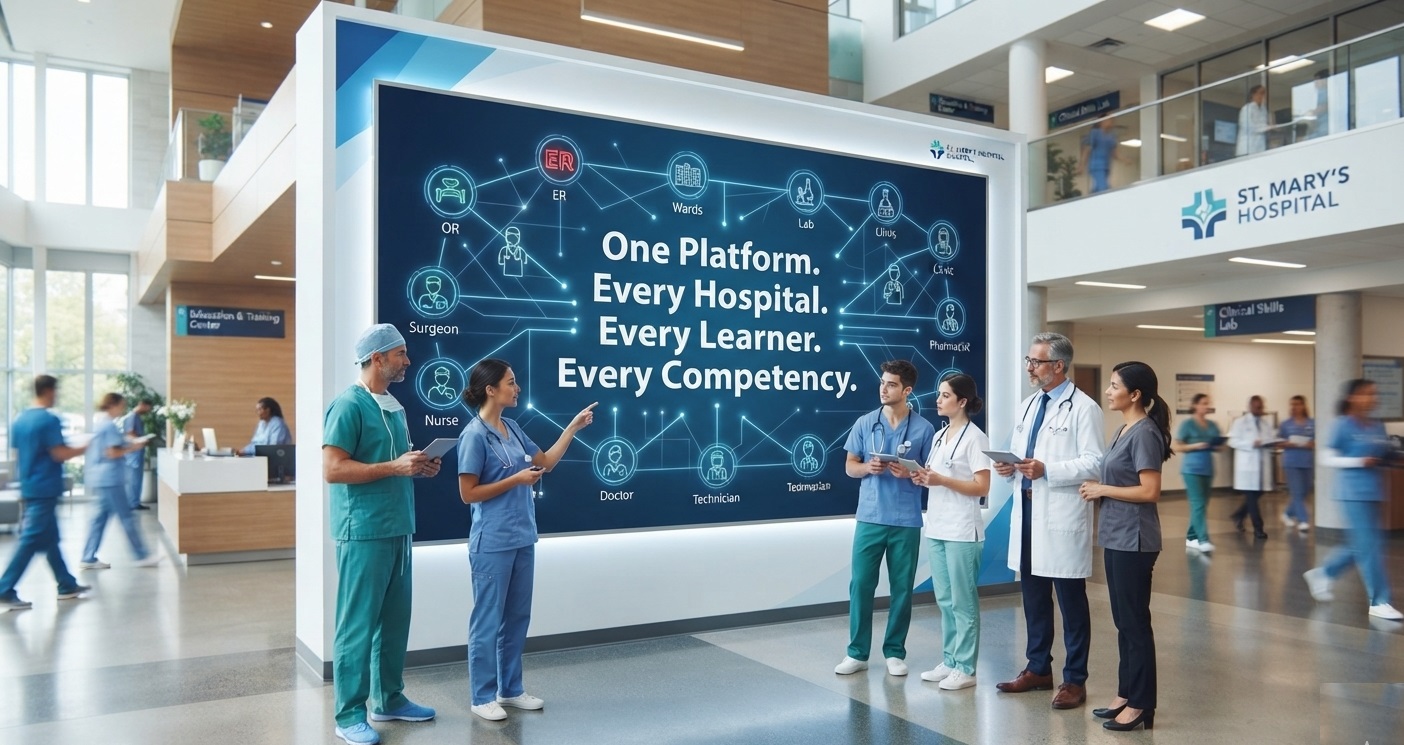
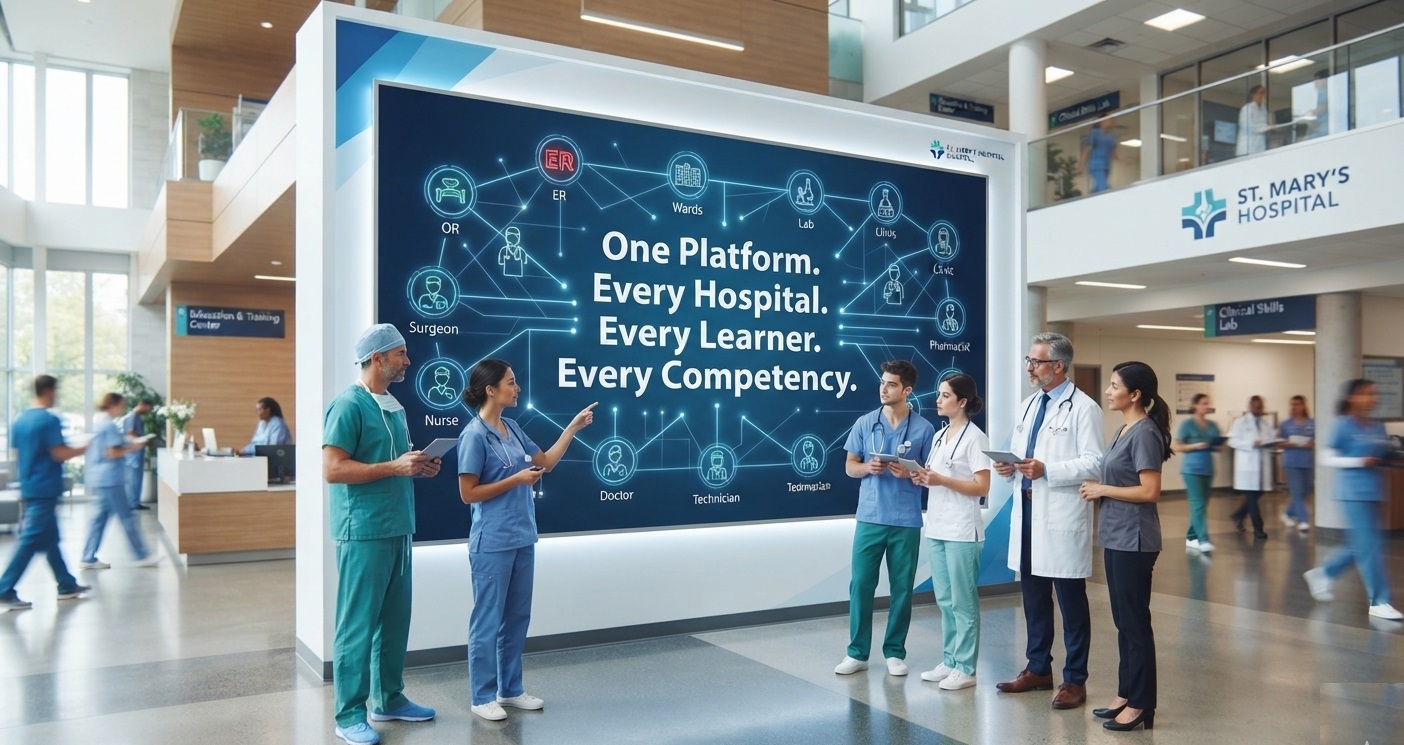
Platform. Every Hospital. Every Learner. Every Competency." is the vision behind
unified healthcare workforce intelligence platforms, such as [HEAL360](https://heal360connect.com/
""One Platform. Every Hospital. Every Learner. Every
Competency.""). In high-stakes medical environments, traditional
education, compliance tracking, and skill verifications are heavily fragmented.
This specialized infrastructure integrates all training, certification, and
performance data into a single enterprise system.
Why
It Is Required: The Fragmentation Crisis
In
modern healthcare facilities, tracking professional development and legal
compliance is incredibly complex.
How
It Benefits the Hospital
Centralizing
clinical growth maps directly onto improved business efficiency and
institutional prestige:
How
It Benefits the End User (Learners & Educators)
Whether
for a surgeon, nurse, technician, or pharmacist, the user-facing ecosystem
simplifies daily clinical education:
Impact
on Individual & Operational Performance
Unifying
education and workforce analytics delivers a highly-skilled care team and
highly-tuned hospital logistics
|
Performance Indicator |
Old Fragmented Model |
Unified "One Platform" Model |
|
System Visibility |
Outdated data pulled mostly during
formal annual reviews. |
Real-time interactive dashboards
monitoring live competency metrics. |
|
Team Efficiency |
Delayed handoffs, communication
breakdowns, and disjointed protocols. |
Structured operational design backed
by clear competency data, boosting workforce alignment up to 25%. |
|
Remediation & Skill Gaps |
Discovered late after errors occur or
during retrospective reviews. |
Targeted evaluations trigger immediate
automated training to bridge technical skill gaps before clinical deployment. |
Would
you like me to tailor a specific operational workflow outline or look at what a
digital clinical dashboard layout should look like for a hospital administrator
versus a learning practitioner?
Tue, 20 Oct 2026

HEAL360 — Healthcare Learning & Workforce Intelligence Platform HEAL360 is a healthcare-focused Learning Management System,, competency development, and workforce intelligence platform designed for hospitals, healthcare organisations, doctors, nurses, paramedical teams, allied healthcare professionals, and other clinical and non-clinical staff. HEAL360's mission is simple: to use learning, technology, and continuous skill development to empower healthcare professionals to deliver safer, more competent, and higher-quality patient care. HEAL360 — Learn. Upskill. Demonstrate Competency. Deliver Better Care.
Leave a comment